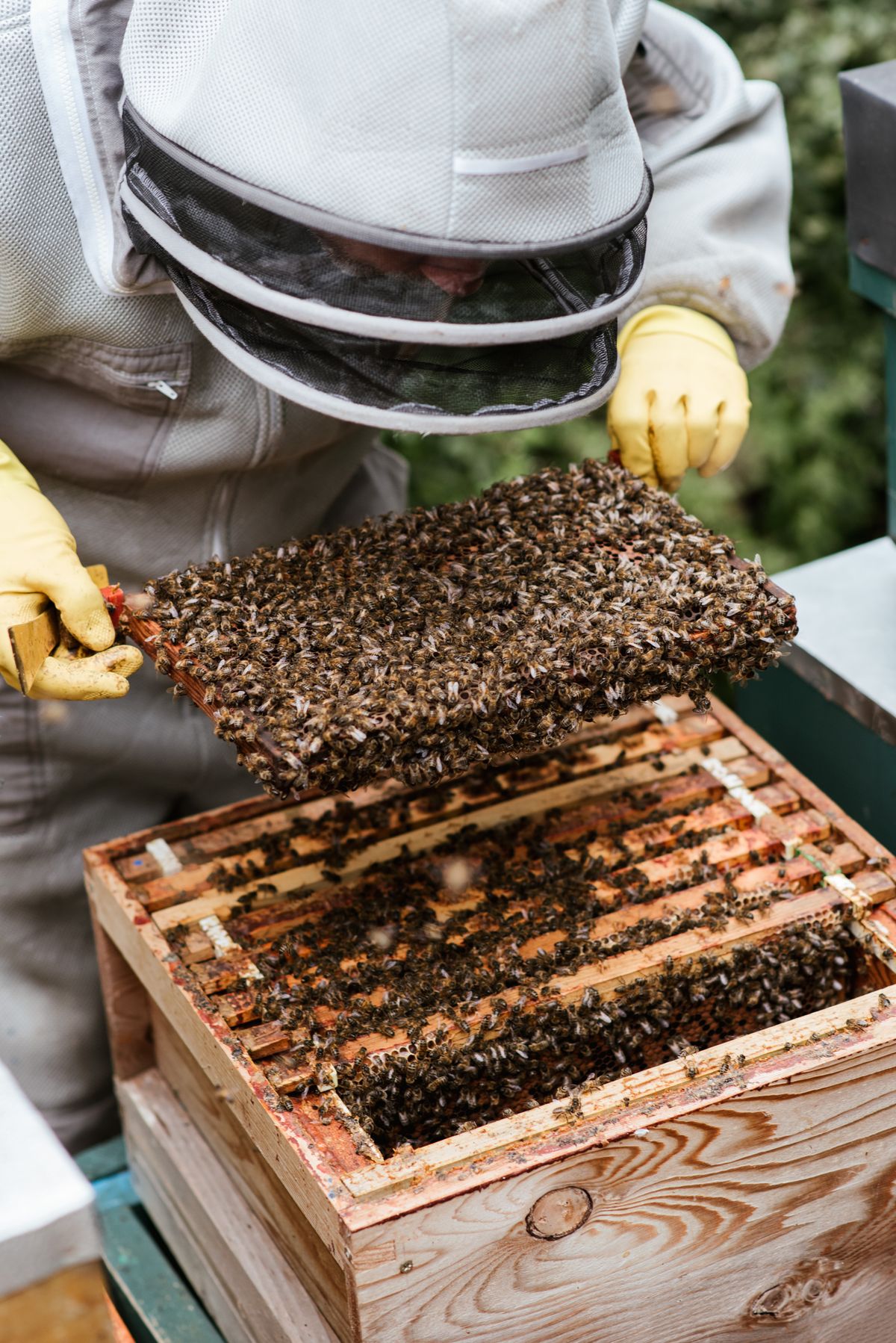
Buying honey from a nearby beekeeper gives you a chance to ask about the harvest and try a flavor you may not know. Start with those details. The word local does not, by itself, establish how honey was processed, where every batch came from or whether it is better for your health.
This is a noncommercial buying guide. It does not recommend a particular seller or contain paid purchase links. The photographs illustrate beekeeping and honey; they do not identify a local supplier.
Ask where the honey comes from
Ask where the producing hives were located and whether the honey in this jar was harvested there. A nearby shop or bottler address does not answer that question on its own. The seller may keep bees, buy from other beekeepers or blend honey from several sources.
- Is this honey from your own hives, another beekeeper or a blend?
- Where were the hives for this batch, and when was it harvested?
- What harvest or lot information can you provide?
- Was it strained, filtered, warmed or otherwise processed?
Ask what the seller means by raw rather than assuming a particular processing method. Local and raw describe different things, and neither word establishes organic certification or a nutritional advantage.
Choose a flavor you enjoy
Honey can vary in flavor and color with its floral source. The Nashville Area Beekeepers Association encourages buyers to ask beekeepers about origin and describes that floral variation. That does not mean every jar sold nearby will taste the same.
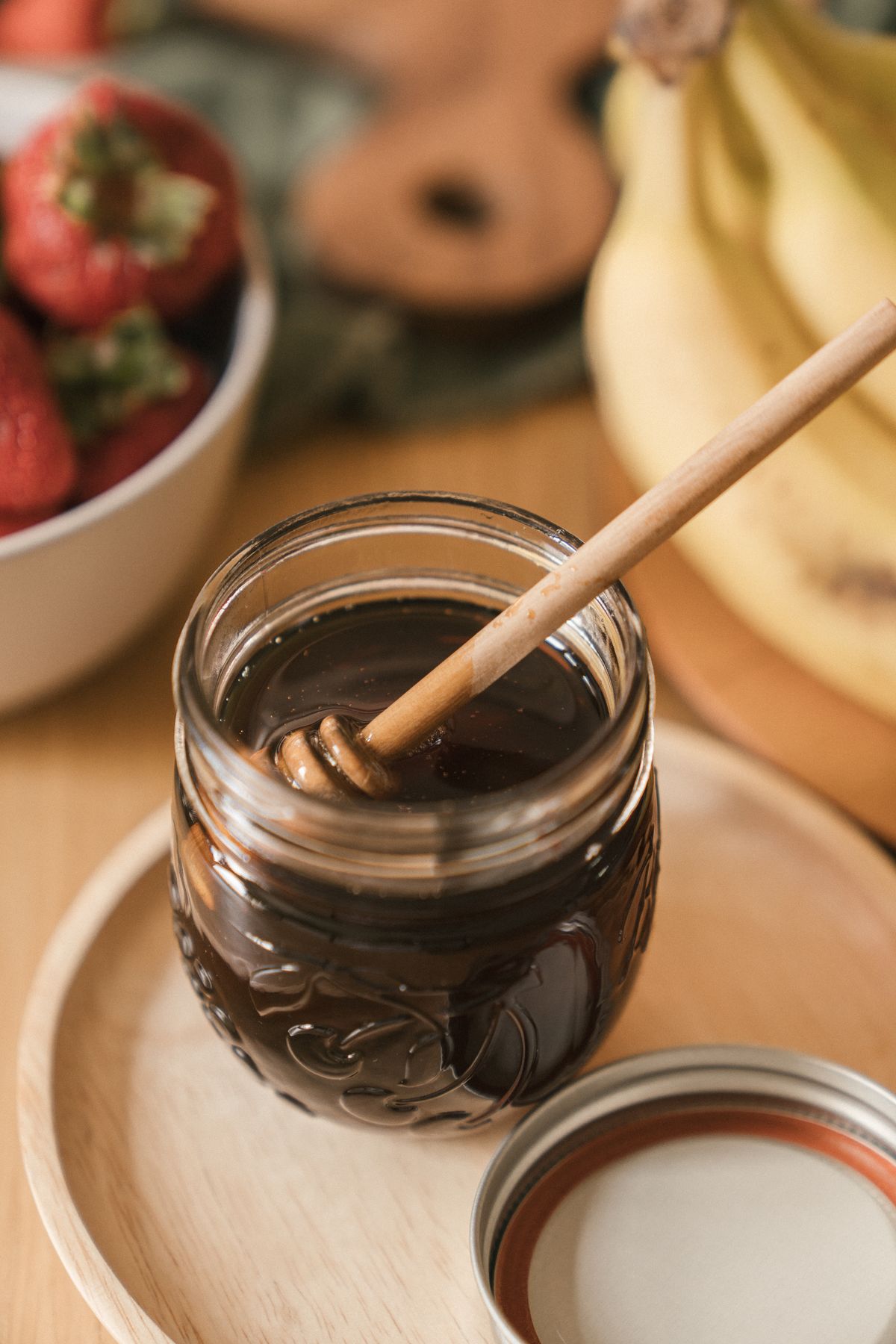 Illustrative photograph unavailable.
Depending on what is produced or sold in your area, you may encounter wildflower, clover, orange blossom, buckwheat or lavender honey. Ask what supports a named floral source. U.S. FDA guidance on honey source declarations addresses plant or blossom names when they describe the chief floral source and the producer can substantiate that claim.
If samples are available, try one before choosing a jar. Otherwise, a small jar lets you decide how the flavor works in tea, on toast or in a dressing before buying more. A local label alone does not establish that the honey is fresher, purer or more flavorful than another jar.
What buying directly supports
A purchase directly from a beekeeper supports that seller's business. It also gives you an opportunity to ask how they manage their hives and handle the honey. Ask about those practices if they matter to your choice.
Distance alone does not establish a lower environmental impact, healthier bee populations or better biodiversity. Those claims require evidence about the particular producer and supply chain. Choose a seller whose answers you find useful without treating a local label as an environmental certification.
Local honey and the allergy myth
Local honey is not an established treatment for pollen allergies. The American Academy of Allergy, Asthma & Immunology explains that high-quality studies do not demonstrate that it is effective for treating allergies. Eating honey is not equivalent to prescribed allergen immunotherapy, and the pollen in a jar is not a calibrated treatment dose.
Choose honey for its flavor rather than as an allergy experiment. Do not replace allergy care with it. The American College of Allergy, Asthma & Immunology also discusses the lack of demonstrated seasonal-allergy benefit and the possibility of reactions in very sensitive people.
Honey contributes sugars to food. FDA's added-sugars guidance includes honey and syrups; a local or raw label does not make honey sugar-free. CDC advises against giving honey or products made with honey to children younger than one year. That warning also applies to honey-based hot honey.
Where to look and what to compare
Farmers' markets, local stores, beekeeper associations, apiaries, online sellers and community fairs can be starting points. A market stall or an online claim does not independently verify origin, so bring the same questions to each seller.
- Compare price per ounce of net weight, rather than container volume. For example, an $8 jar with a net weight of 8 ounces costs $1 per ounce. This is an arithmetic example, not a quoted price.
- Ask about ingredients, processing, harvest information and storage directions.
- Contact an apiary before visiting; do not assume it offers tours, samples or walk-in sales.
- Check availability with the seller before making a trip or placing an order.
Crystallization alone is not proof that honey is adulterated or spoiled. The University of Minnesota Bee Lab explains how nectar composition affects crystallization. Follow the producer's storage instructions and ask about any condition you do not recognize.
Ask separately about local hot honey
If you want chili heat, ask whether a nearby producer sells hot honey and where the honey used in that product comes from. A local business may use honey from elsewhere. Check the complete ingredients, heat description, net weight and storage directions for that exact product.
Plain honey and a honey-and-chili mixture are different products. Follow the storage directions for the exact product rather than borrowing directions from plain honey. For flavor and cooking differences, read our comparison of hot honey and other sweeteners.
Buy a jar because you like its flavor and understand its origin and handling. Keep any health or environmental promise separate from what the seller can actually substantiate.