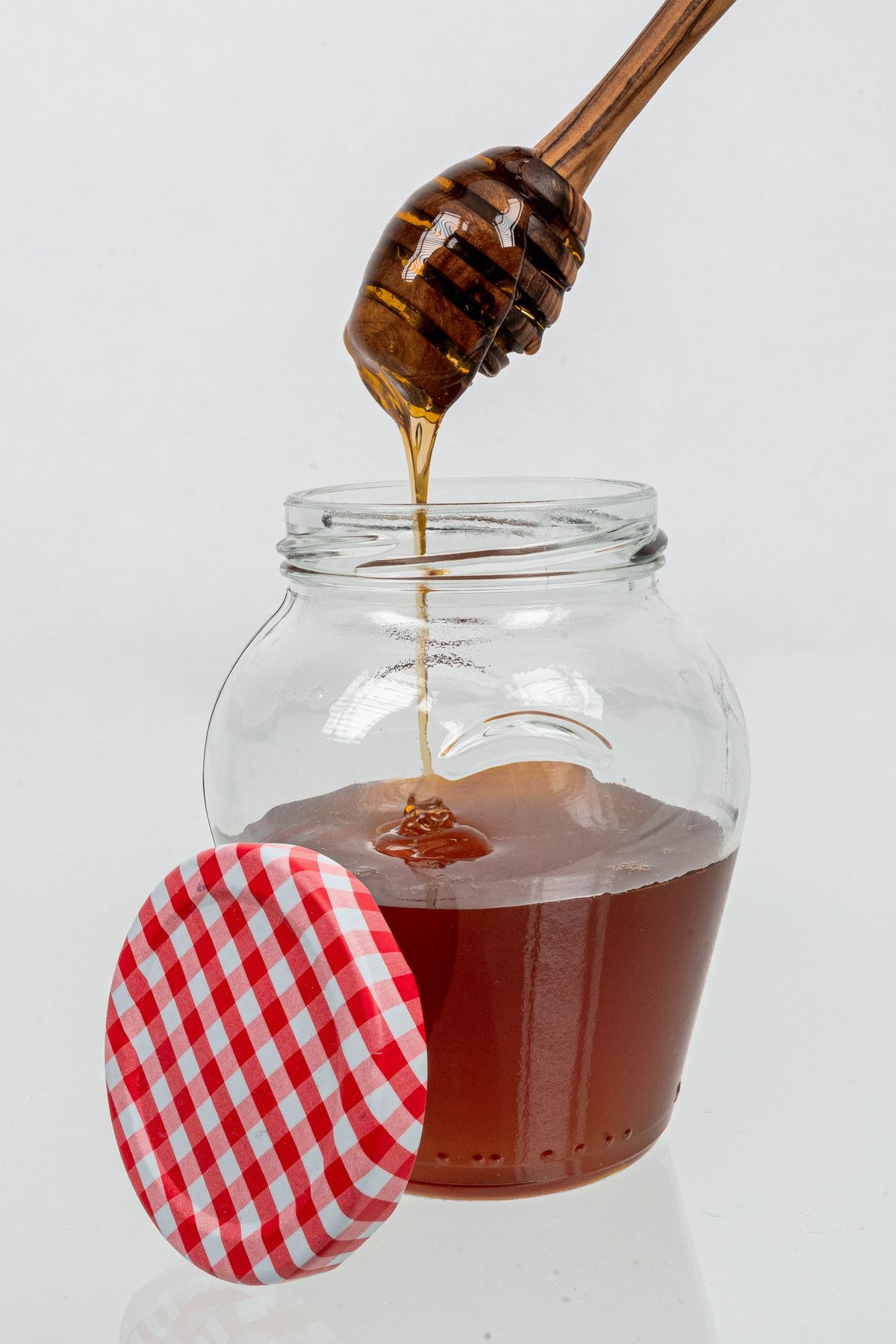
A home spa evening can be simple: clean towels, the products you already use and a little time to yourself. Hot honey can wait for the snack afterward.
A bottle made for drizzling over food is not a ready-made face mask, scalp treatment or lip balm. Honey's history in wound care and the properties of individual ingredients do not establish that a honey-and-chili condiment belongs on your skin. This article contains no paid product recommendations.
Hot honey means chili heat, not a skin treatment
In food, hot honey usually means honey with chili heat. Warming honey is a separate process. Neither description tells you that a preparation has been formulated or tested for your face, lips or scalp.
Heating a pantry mixture to a particular temperature does not establish a therapeutic benefit or a safe skin-care recipe.
Medical honey is a different preparation
Oxford Health NHS's patient guide to medical honey describes honey-containing wound dressings chosen after clinical assessment. It also explains why supermarket honey is not an equivalent substitute for those products.
That distinction is about the actual preparation and intended use. It does not make every product described as medical honey identical, and wound-care evidence does not establish that culinary hot honey treats acne, eczema, sunburn or chapped lips. Ask a healthcare professional about wound care instead of applying a pantry mixture.
Ingredient stories do not establish skin or hair benefits
Claims about antioxidants, enzymes or circulation need evidence that applies to the preparation and result being claimed. An ingredient's presence does not show that a homemade hot-honey mixture reduces wrinkles, removes cellulite, grows hair or treats dandruff.
The sources below concern clinical products, skin-care products or pepper exposure. They do not test the homemade preparations discussed here.
Chili can irritate skin and eyes
Poison Control explains that capsaicin-containing pepper oils can cause skin pain, redness and irritation. Transfer to the eyes can also be painful. It advises avoiding face and eye contact while handling hot peppers.
Enjoying chili in food does not mean the same mixture will feel comfortable on sensitive skin. A tingling or burning sensation is not evidence that a homemade beauty treatment is working. Use culinary hot honey as food, not as a facial mask or a remedy for irritated skin.
 Illustrative photograph unavailable.
Skip the improvised masks, scrubs and bath mixtures
Adding avocado, cinnamon, yogurt, oats or coffee grounds does not establish a safe or effective cosmetic formula. The same applies to mixing culinary hot honey with milk for a bath, olive or tea tree oil for hair, or aloe and coconut oil for sunburned skin or lips.
The American Academy of Dermatology's facial-mask guidance explains that irritating ingredients and overuse can damage the skin barrier. Its advice concerns skin-care products and their directions; it does not validate a homemade chili-condiment mask. AAD's product-testing guidance describes small-area checks of skin-care products and separately discusses diagnostic patch testing by a clinician.
If a product causes a reaction
AAD advises washing off a facial mask if it causes itching, burning or stinging, and consulting a dermatologist if skin feels worse afterward. Follow the product's directions and seek professional advice about a persistent rash or skin condition.
For a pepper exposure, use Poison Control's exposure-specific advice rather than trying a succession of pantry remedies. In the United States, its help line is 1-800-222-1222. Trouble breathing or chest discomfort calls for emergency help.
Keep the food and self-care routines separate
Choose skin-care products for their labeled purpose and follow their instructions. A honey-themed cosmetic and a kitchen bottle are separate preparations, even when their names share an ingredient.
If you want a snack after your routine, our sweet-and-spicy snack-table guide has food ideas. The coffee and tea guide explores sweetening drinks. Check the relevant food labels and choose what suits your meal.