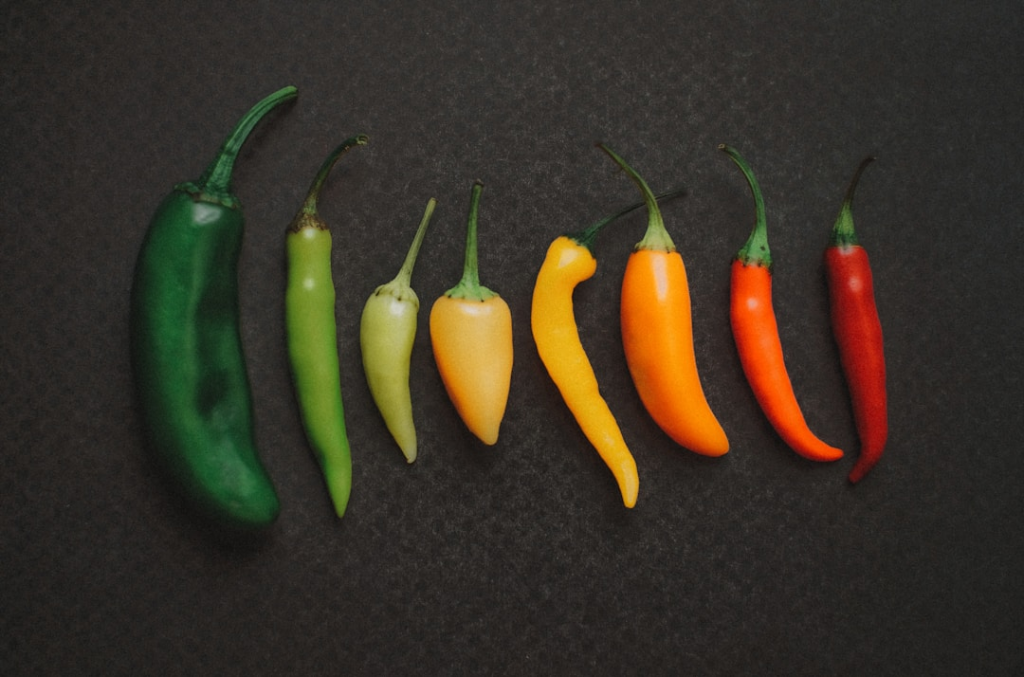
A bottle marked “hot” doesn’t tell you much about how it will taste to you. Scoville Heat Units, usually shortened to SHU, give pepper growers and food makers a way to describe chili heat numerically. They’re useful context, but two foods with similar ratings can feel different to the people eating them.
Use the scale to compare published measurements, then choose a heat level you enjoy with your food. The photographs below are editorial illustrations; they do not identify tested cultivars, a product’s heat rating or dishes tested by Teddy Danielson.
What Scoville Heat Units measure
SHU describe pungency associated with capsaicinoids, the compounds that include capsaicin. A higher measured value means more pungency in the tested sample.
New Mexico State University’s guide to measuring chile heat describes the original taste-based test: people sample progressively diluted extracts until they can no longer detect heat. Their sensitivity affects the result. Modern laboratories can use high-performance liquid chromatography, or HPLC, to measure extracted capsaicinoids.
The scale takes its name from Wilbur Scoville, whose method was published in 1912. It measures chili pungency; it does not describe every sensation people call spicy.
 Illustrative photograph unavailable.
Where pepper heat comes from
Capsaicinoids form in glands associated with the placenta, the pepper’s inner tissue that holds the seeds. NMSU’s cultivar guide explains that seeds can pick up these compounds through contact. Removing seeds alone does not reliably make a pepper mild.
Genetics, growing conditions and fruit age affect the heat. A cultivar’s published average gives you context, rather than a laboratory result for every pepper bearing its name.
 Illustrative photograph unavailable.
Five cultivar averages in context
These figures come from Table 1 in NMSU Circular 706. The university labels them as averages that can vary by year and growing location.
| Specific cultivar | Reported SHU |
|---|---|
| NuMex Conquistador | 0 |
| NuMex Joe E. Parker | 900 |
| NuMex Primavera, a jalapeño type | 8,500 |
| NuMex Jalmundo, a jalapeño type | 17,000 |
| NuMex Vaquero, a jalapeño type | 33,000 |
The three jalapeño cultivars illustrate why one broad range cannot describe every jalapeño.
At the extreme end, Guinness World Records recognized Pepper X in 2023 at an average 2,693,000 SHU, replacing the Carolina Reaper. Guinness still identified Pepper X as its verified hottest pepper in an August 2026 article. These are dated record statements, not a suggestion to taste an extreme pepper.
What the scale tells you about hot honey
A pepper’s rating does not become the rating of honey infused with it. The recipe, amount of pepper and quantity of honey affect the finished mixture. There is no single verified SHU range for all hot honey.
If a maker publishes a tested value for its finished honey, use that information for that product. A pepper name or a label such as mild, medium or hot does not supply a precise measurement. Check the ingredients and begin with a small drizzle on familiar food.
 Illustrative photograph unavailable.
Compare finished products using their own published information. Honey, hot sauce and seasoning blends can have different formulas even when their labels name the same pepper.
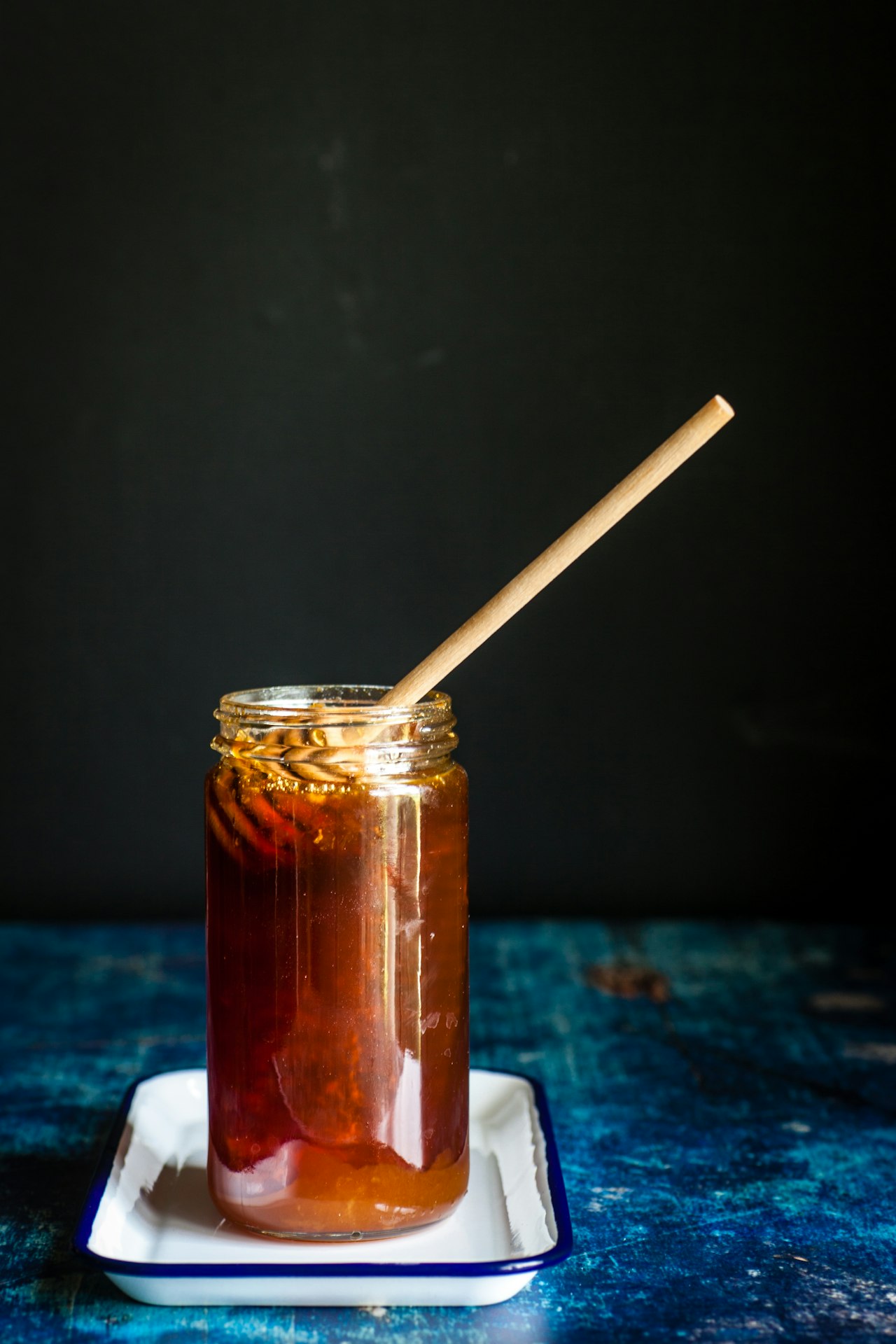 Illustrative photograph unavailable.
Handle hot peppers carefully
Wear gloves when working with hot peppers, keep hands away from your eyes and face, and ventilate the cooking area. Poison Control’s capsaicin guidance says small sips of milk or water may help oral burning. Skip milk if you cannot have it. Neither is a guaranteed remedy.
For an exposure question in the United States, call Poison Control at 1-800-222-1222. Call 911 for trouble breathing or chest discomfort.
Choose a flavor for your next meal
Serve hot honey separately so people can choose their own drizzle. If you are choosing a pepper for a recipe, our chili-selection guide compares pepper forms and flavor directions.
For preparation guidance, read Shane Brand’s Homemade Hot Honey Recipe and its linked complete food-safety method. For adult drinks made with bottled honey, Teddy’s simple-syrup guide explains flavor choices before mixing.
 Illustrative photograph unavailable.